
Rodents continue to be one of the most persistent challenges impacting farm operations worldwide. Among them, house mice, Norway rats, and roof rats consistently rank as the top three species causing damage across animal health environments. While they are often grouped together, each species behaves very differently and those differences matter when it comes to effective control.
House mice are small, agile, and highly adaptable. Their ability to squeeze through tiny openings allows them to invade feed rooms, equipment areas, and storage spaces with ease. Because they reproduce rapidly, even minor sanitation issues can quickly turn into a larger infestation.
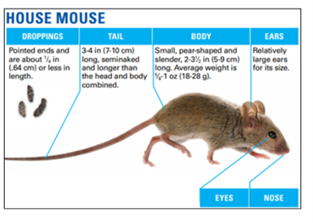
One of the easiest ways to recognize house mice is by their physical traits – house mice have small, slender bodies, large ears relative to their head, and long, thin tails that are roughly the same length as their body. Their droppings are small, dark, and pointed at both ends, resembling grains of rice. Sealing small entry points with Xcluder® Rodent-Proofing Solutions and reducing clutter around feed and storage areas can help limit access and nesting opportunities.
Norway rats on the other hand, are ground dwellers that often burrow near building foundations, manure pits, and feed storage areas. Their size and strength make them especially destructive, contributing to structural damage and feed contamination.
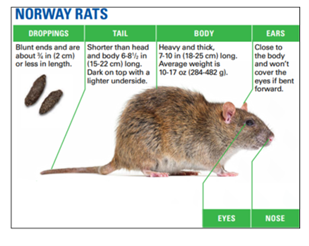
Norway rats are large and heavy-bodied, with small ears, a blunt nose, and a thick tail that is shorter than their body length. Their droppings are larger and capsule-shaped with blunt ends, commonly found along walls, near burrows, or close to ground-level food sources. Regularly inspecting foundations and improving sanitation around ground-level feed and waste areas can reduce the conditions that attract these rodents.
Roof rats prefer elevated environments and are excellent climbers, commonly found in rafters, beams, and overhead utility lines. Farms with complex structures are particularly vulnerable if monitoring is limited to ground level.
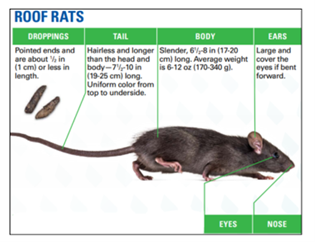
Roof rats have slender bodies, pointed noses, large ears, and long tails that are longer than their head and body combined, which helps distinguish them from Norway rats. Their droppings are banana-shaped with pointed ends, often found along rafters, ledges, and elevated runways. Trimming nearby vegetation and securing roof and vent openings can help prevent roof rats from gaining access.
Understanding where each species lives, how it moves, and what it targets is critical to building an effective rodent management strategy. A one-size-fits-all approach often leaves gaps that rodents exploit, increasing risks to feed integrity, animal health, and overall farm biosecurity.
By tailoring control measures to the specific behaviors of house mice, Norway rats, and roof rats, farms can improve prevention efforts, reduce damage, and maintain a healthier, more secure operation. Learn more on our resource page. Sign up for a free farm inspection or reach out to one of our team members for support.